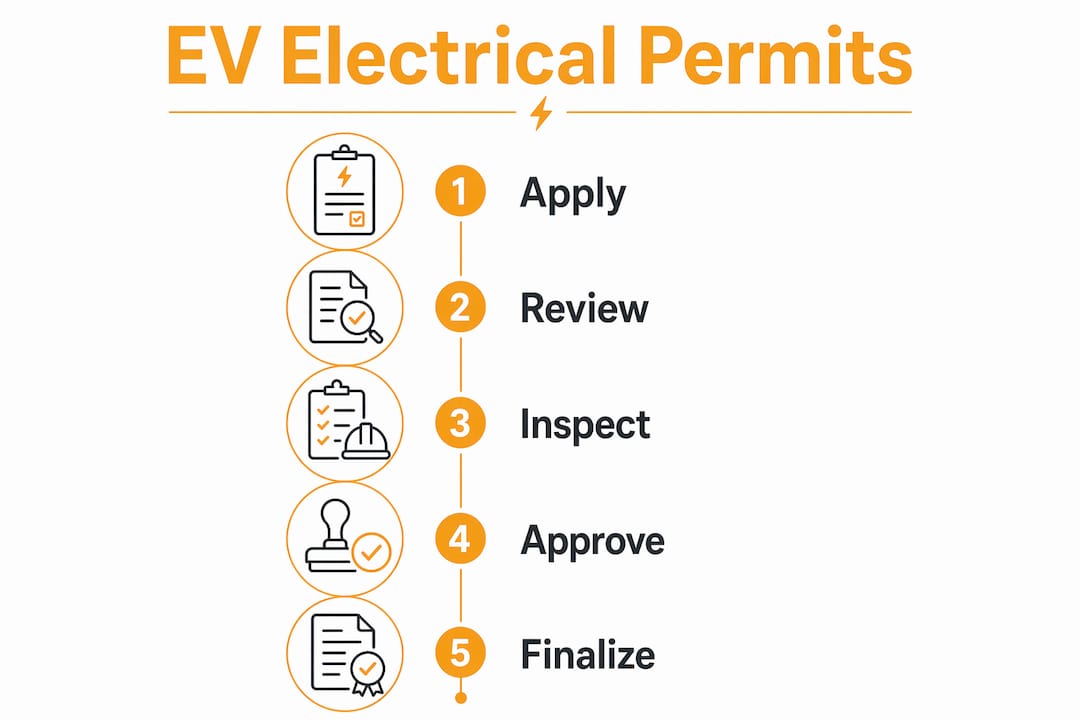
An electrical permit is the official authorization required before any new circuit or wiring work begins on your property, and it is legally required for virtually all Level 2 EV charger installations. The role of electrical permit in EV installation goes far beyond paperwork. Permits protect you from fire hazards, insurance denials, and costly rework discovered during a home sale. Under NEC Article 625, any new dedicated circuit for an electric vehicle supply equipment (EVSE) unit must be inspected and approved by a licensed authority. Skipping this step puts your home, your wallet, and your insurance coverage at serious risk.
What types of electrical permits are needed for EV charger installations?
The permit type you need depends on the charger level and the scope of electrical work involved. Level 2 installations require either a NEMA 14-50 outlet or a hardwired setup, and both count as new electrical work under the National Electrical Code. That means a dedicated circuit permit is mandatory in every jurisdiction.
Level 1 chargers that plug into an existing 120V outlet may appear permit-exempt. The catch is that NEC 625.40 requires dedicated circuits for most EV chargers, even Level 1 units, when new wiring is involved. If your existing outlet is not on a dedicated circuit, you need a permit to rewire it before the charger is code compliant.
Here is a breakdown of the most common permit types for EV charger work:
- Electrical installation permit. Required for any new 240V circuit, panel breaker addition, or hardwired EVSE unit.
- Outlet or receptacle permit. Required when adding a NEMA 14-50 or NEMA 6-50 outlet that did not previously exist.
- Load calculation review. Required in many jurisdictions when the new circuit increases total panel load beyond a threshold.
- Plan review permit. Required for commercial properties, multi-unit residential buildings, or installations with multiple charging stations.
- PE-stamped engineered drawings. Larger residential projects may require a Professional Engineer stamp, which adds both time and cost to the approval process.
Property developers planning multi-unit EV charging infrastructure should expect plan review requirements in most major cities. Residential homeowners adding a single Level 2 charger typically need only a standard electrical permit, but local rules vary.
How much does an electrical permit cost, and how long does approval take?
Residential permit fees typically range from $50 to $200, but the range across jurisdictions is wide. Seattle charges $371 for a standard electrical permit, while Denver charges $43 for the same type of work. The difference reflects local fee structures, not the complexity of your specific job.
| Jurisdiction | Typical Permit Fee | Processing Time |
|---|---|---|
| Denver, CO | $43 | Same day to 3 days |
| National average | $50–$200 | 1–2 weeks |
| Seattle, WA | $371 | 1–3 weeks |
| Projects requiring PE stamp | $100–$400 added cost | 1–3 weeks added |
Several factors push permit costs higher. Valuation-based fee structures charge a percentage of the total project cost, so a panel upgrade plus EV charger installation costs more to permit than a simple outlet addition. Engineering documentation, when required, adds $100 to $400 to the total. Some jurisdictions offer same-day processing for straightforward residential work, while others require a full plan review that takes 1 to 3 weeks.
Pro Tip: Ask your licensed electrician to pull the permit on your behalf. Most jurisdictions require a licensed contractor to submit the application anyway, and experienced electricians know which local offices offer expedited review.
Permit applications are almost always managed by the licensed electrician you hire. DIY permit submissions are restricted or prohibited in most states, which is one more reason to hire a qualified professional from the start.
Why are electrical permits critical for safety and legal compliance?
Permits are the mechanism that forces every EV charger installation to meet NEC 625 safety standards. Inspectors verify GFCI protection, proper breaker sizing, and correct load calculations before your charger goes live. Without that inspection, you have no independent confirmation the work was done correctly.
The risks of skipping permits are concrete and expensive:
- Fire hazard. Undersized wiring or an improperly sized breaker on a 240V circuit is a leading cause of residential electrical fires.
- Insurance denial. Homeowners insurance policies routinely deny claims for damage caused by unpermitted electrical work.
- Resale complications. Unpermitted work discovered during a home sale requires costly demolition, correction, and re-inspection before closing.
- Liability exposure. If unpermitted wiring causes injury or property damage, you bear personal liability that insurance will not cover.
Inspectors are the last line of defense between a homeowner and a dangerous installation. Their sign-off is not a formality. It is a safety checkpoint that protects your family and your property.
Pulling permits also protects contractors by creating a permanent record that the work was verified by the authority having jurisdiction (AHJ). That record follows the property and supports both resale value and future insurance claims.
How do electrical permits connect to EV tax credits and rebates?
Permit compliance directly affects your ability to claim federal and state financial incentives. The federal Alternative Fuel Vehicle Refueling Property Credit offers a 30% tax credit up to $1,000 for qualified installation costs, with eligibility running through june 30, 2026. That credit requires the installation to meet code, which means a permitted and inspected job.
Key requirements for the federal credit include:
- The charger must be installed in a qualifying census tract.
- You must file IRS Form 8911 to claim the credit.
- The installation must meet applicable electrical codes, which a permit and inspection confirm.
- Local utility rebate programs often require a copy of the permit as proof of a code-compliant installation.
Homeowners who skip the permit process risk losing access to these incentives entirely. A $1,000 tax credit is a meaningful offset against a typical EV charger installation cost. Losing it because the work was not permitted is an avoidable and expensive mistake.
Common challenges and best practices when getting your EV permit
The permitting process has real friction points, but most of them are avoidable with the right preparation.
-
Hire a licensed electrician with EV permit experience. Many jurisdictions require a licensed professional to pull the permit. An electrician who has done this before knows which documents to submit and which local offices move fastest.
-
Check your electrical panel before applying. Older panels with limited capacity may need an upgrade before a 240V circuit can be added. Discovering this after submitting your permit application delays the project and increases cost.
-
Submit complete plans the first time. Incomplete applications are the single biggest cause of permit delays. Include load calculations, circuit diagrams, and equipment specifications in the initial submission.
-
Keep all permit and inspection records. Store the permit certificate, inspection sign-off, and any engineering drawings in a dedicated home file. These documents matter when you sell the property or file an insurance claim.
-
Never attempt DIY electrical work without a permit. Unpermitted installations can be detected through utility meter history and physical wiring evidence. Inspectors know what to look for, and the correction costs far exceed what a permit would have cost upfront.
Pro Tip: If your project involves a panel upgrade, ask your electrician to bundle the panel permit and the EV charger permit into a single submission. Many jurisdictions allow combined applications, which saves time and sometimes reduces total fees.
Property developers adding EV charging to multi-unit buildings should budget for PE-stamped drawings from the start. Waiting until the permit office requests them adds weeks to the timeline and disrupts construction schedules.
Key Takeaways
Electrical permits are a non-negotiable requirement for EV charger installations, protecting homeowners from safety hazards, legal liability, and lost tax credits.
| Point | Details |
|---|---|
| Permits are legally required | Level 2 EV charger installations always need an electrical permit under NEC Article 625. |
| Permit costs vary widely | Fees range from $43 in Denver to $371 in Seattle, so check your local jurisdiction early. |
| Skipping permits is costly | Unpermitted work triggers insurance denials, resale delays, and expensive corrections. |
| Tax credits require compliance | The federal 30% credit up to $1,000 requires a code-compliant, permitted installation. |
| Licensed electricians manage permits | Hire a professional who handles the application, inspection scheduling, and documentation. |
Why I think most homeowners underestimate the permit requirement
Most homeowners I talk to assume the permit is just a bureaucratic box to check. They are wrong, and the misunderstanding costs real money. The permit is the only independent verification that your 240V circuit was wired correctly. Without it, you are trusting the installer completely, with no third-party check.
The tax credit angle surprises people the most. A homeowner who skips the permit to save $150 in fees can lose a $1,000 federal tax credit. That is a $850 net loss before accounting for any correction costs if the work is flagged later. The math does not work in favor of cutting corners.
Property developers face even higher stakes. An unpermitted EV charging installation in a multi-unit building can trigger stop-work orders, delay certificate of occupancy, and expose the developer to tenant liability. The permit process feels slow until you compare it to the cost of a failed inspection at closing.
The contractors who skip permits are not doing you a favor. They are protecting themselves from accountability while shifting all the risk onto you. A licensed electrician who pulls permits is telling you something important: they stand behind their work enough to have it inspected.
— Mohthshim
Trusted EV charger installations with 1800-satellitetv
Getting the permit right starts with hiring the right electrician. 1800-satellitetv connects homeowners and property developers with licensed electricians nationwide who specialize in EV charger installations and handle the full permit process from application to final inspection.

Every technician at 1800-satellitetv is licensed, insured, and familiar with local permit requirements across all 50 states. The flat-rate pricing model means you know the total cost before work begins, with no surprises after the inspection. A 1-year workmanship warranty backs every completed job. Whether you need a single Level 2 charger at home or a multi-unit EV charging setup for a development project, 1800-satellitetv handles the compliance work so you do not have to.
FAQ
Do I always need a permit for an EV charger installation?
Yes, for any installation involving a new circuit or dedicated wiring. Level 1 chargers using an existing dedicated outlet may not require a permit, but Level 2 installations always do under NEC Article 625.
What is the typical electrical permit cost for an EV charger?
Permit fees typically range from $50 to $200 for residential installations, though fees vary widely by city. Seattle charges $371 while Denver charges $43 for comparable electrical permit work.
Can I lose my EV tax credit if I skip the permit?
Yes. The federal Alternative Fuel Vehicle Refueling Property Credit requires a code-compliant installation, which a permit and inspection confirm. Unpermitted work disqualifies you from claiming the 30% credit up to $1,000.
How long does the EV charger permit process take?
Processing times range from same-day approval in some cities to 1 to 3 weeks when a plan review is required. Projects needing PE-stamped engineering drawings add another 1 to 3 weeks to the timeline.
Can I pull the permit myself as a homeowner?
Most states restrict or prohibit homeowner-pulled permits for electrical work involving new circuits. A licensed electrician is typically required to submit the application and manage inspection scheduling.